Cybersecurity 101 for Small Businesses: Why You're a Target (and What to Do About It)
 Declan Mahjoub
A no-jargon starting point for owners who don't have an IT team and aren't planning to hire one.
I lost count of how many times I've sat across from a small business owner who told me, with total confidence, "We're way too small to be a target." Then they show me their setup. Shared admin password on a sticky note. Email without MFA. A backup drive plugged into the same server it's supposed to back up. By any definition you'd want to use, they were a target. They just didn't know it yet.
This is the post I wish every owner would read before that conversation. No fear-mongering, no acronym soup. Just the basics worth knowing, and a short list of things you can fix this week.

Why criminals love small businesses
Most attacks on small businesses aren't "targeted" the way TV shows suggest. They're automated. Criminals run scripts that scan the entire internet looking for unpatched software, weak passwords, and exposed remote-access ports. When a script finds a way in, it doesn't care if you have five employees or five thousand. It just walks through the door.
Small businesses are the sweet spot for this kind of attacker. There's real money in your bank account, real customer data on your servers, and almost nobody whose actual job is to notice when something's wrong. Compare that to Bank of America, which has a 24/7 security operations center, and you can see why criminals shop down market.
About three-quarters of SMB owners now say cyberattacks are their top operational worry. They're right to worry. The numbers from IBM put the average SMB breach cost north of $3 million when you add up downtime, recovery, legal exposure, and reputational damage. Industry surveys consistently find that around 40% of small businesses say a single $100,000 incident would shut them down. One ransomware hit that takes you offline for a week is the kind of thing that ends a small business permanently.
Here's a pattern I see almost weekly. An owner tells me their IT guy "handles security." The IT guy is a generalist who installs printers and resets passwords. Nobody is watching for unusual logins. Nobody is patching the firewall firmware. Nobody has tested whether the backups would actually work. That's not a bad IT person. That's a misallocation of expertise. Security is a different skill than support.
The five things that actually go wrong
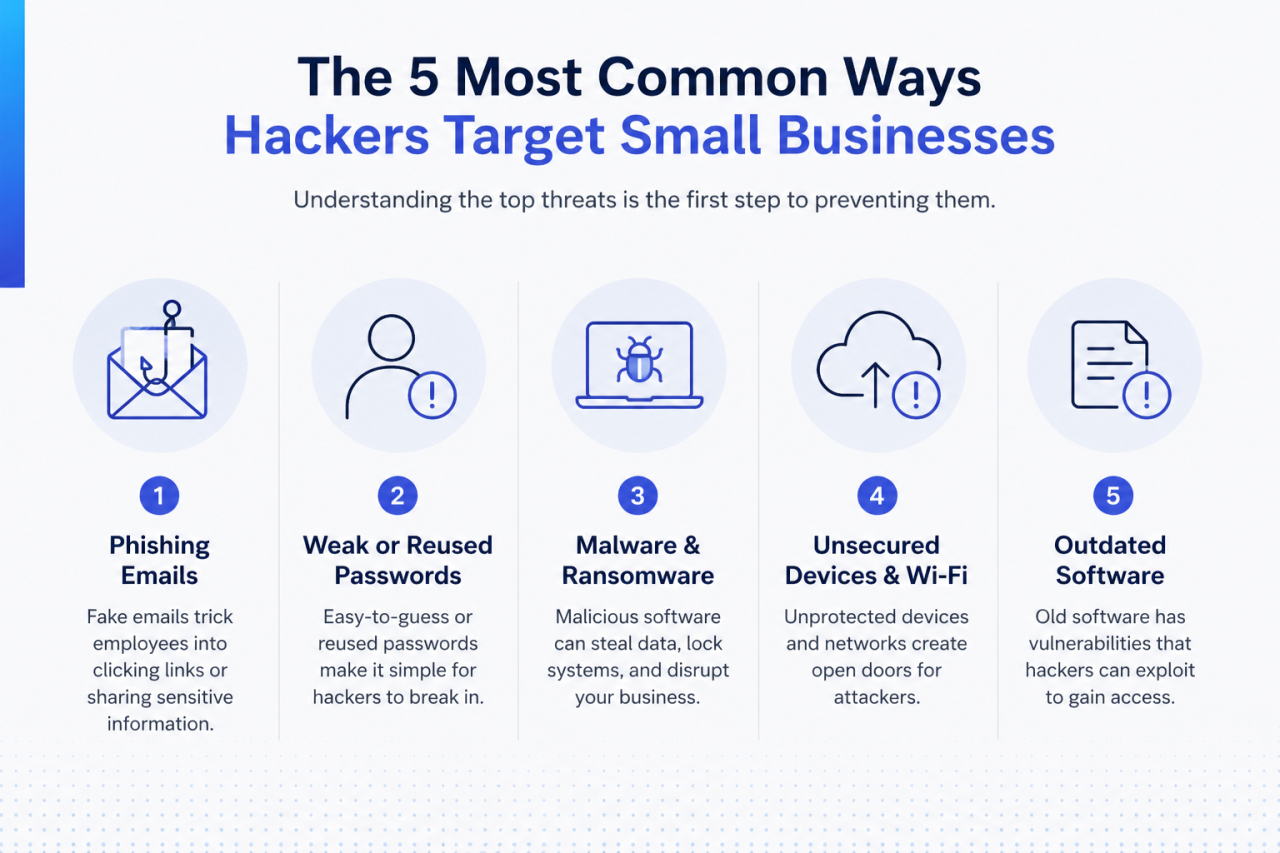
When we get called in after an incident at a small business, we see the same handful of root causes over and over. There's no magic to this list. It's just where the cracks are.
Someone clicked a phishing email and typed their real password into a fake Microsoft 365 login page. A reused password from a six-year-old breach got tried against company email and worked. A laptop without disk encryption walked off in someone's car and nobody could prove what was on it. Backups existed but had been silently failing for two months. And Windows updates hadn't been installed since the original setup, leaving holes wide open that everyone in the criminal world knows about.
Notice what's not on this list: anything you'd see in a Hollywood movie. Real SMB breaches are mundane and almost always preventable.
What 'good enough' looks like
You don't need a million-dollar security program. You need the basics done well, every day. I tell clients to think about it the way they think about locking the shop at night. Nothing fancy. Just consistent.
At a minimum, every small business should have multi-factor authentication on email and any business-critical app. A password manager that everyone actually uses. Automatic Windows and browser updates. A modern endpoint protection tool, not just "Windows Defender, I think?" Tested backups, including one copy that's offline or immutable. And a one-page document describing what to do if something goes sideways.
That short list, done consistently, blocks the overwhelming majority of attacks. It's not glamorous, but it works.
What to do this week
Pick one thing from the list above and finish it before Friday. The most common reason SMB security never improves isn't that owners pick the wrong project. It's that the whole list looks too big, so they freeze and do nothing.
If you only have a half hour, turn on MFA for your email. That single thirty minutes will move you out of the bottom quartile of small business risk. You can do everything else later.
Bringing it home
Cybersecurity for a small business isn't about being paranoid. It's about being prepared. Most criminals are betting you won't bother with the basics, and most of the time they're right. Be the boring exception. Lock the doors, train the team, back up the data, and you'll quietly stay out of the news.
If you read all that and thought "okay, but where do I actually start?" reach out. We do quick, no-pressure reviews for small businesses every week. Tell us where you are, we'll tell you the two or three things worth doing first, and you can take it from there. Visit siemekconsulting.com or drop us a note. We answer our own emails.
Categories: : Cybersecurity